Seasonal Winter Soups to Balance Your Doshas
- Home
- /
- Skin & Beauty Care
- /
- Seasonal Winter Soups to...
With the advent of winter comes celebrations and the spread of flu and colds. Many have the misconception that the winter season weakens immunity, but Ayurveda contradicts this notion. In Ayurveda, winter is divided into two seasons, or ritu: Hemant (early winter) and Sishir (Late winter).
It is considered the best time to strengthen immunity, as the body’s digestive fire (Agni) is at its peak. It strengthens digestion and makes heavier meals easier to digest, leading to higher nutrient absorption and making us feel better naturally.
During winter, the body conserves energy to combat the external cold and requires more food to stay warm. At this time, it is essential to consume warming, nourishing foods like winter soups to maintain energy and balance the doshas.
Understanding Doshas in Winter
Ayurveda recognises three doshas (bodily energies) that originate from the five elements (panch tatva): Fire, Air, Water, Earth, and Sky. The three doshas are present in the human body in different ratios. These doshas govern our bodily functions and have physical and psychological impacts. Winter is considered to be a season of Kapha, whereas Vata Dosha is aggravated during this season. Balancing these doshas is key to maintaining good health.
Vata Dosha is associated with the energy of air and movement
- It governs the body’s motion, including circulation, thoughts, and all actions.
- When Vata is balanced, it fosters creativity, flexibility, and energy.
- Vata dosha imbalance leads to dryness, restlessness, anxiety, and sleep disturbances.
- Tips to balance Vata: eat warm foods like winter soups and ghee; keep your body warm; maintain regular routines; and adopt a healthy lifestyle.
Pitta Dosha is associated with the energy of Fire & Water.
- It governs digestion, metabolism, and body temperature.
- Pitta supports clear decision-making, leadership qualities, and courage.
- Individuals with a dominant Pitta dosha are sharp-minded, medium-built, and exert strong willpower—an imbalance of Pitta can cause skin allergies and inflammation.
- During the winter, Pitta naturally stays balanced and calm.
Tips: avoid overly spicy foods; consume cooked grains, milk with ghee, and mild herbal teas
Kapha Dosha is associated with the energy of Earth & Water
- It governs nourishment, growth, lubrication, stamina, and satisfaction.
- Individuals with a dominant kapha dosha are typically of a sturdy build, have a dependable nature, and tend to be calm and restful.
- During winter, Kapha tends to accumulate, resulting in sluggishness and excessive mucus production.
- An imbalance in Kapha may lead to weight gain and nasal blockage.
- Tips: stay active, eat warm, lightly spiced foods, and limit dairy and heavy fats.
Read More: 10 Ways To Improve Digestion Naturally
Ayurvedic Approach to Winter Immunity
In Ayurveda, immunity and strength, referred to as Bala, include physical, mental, and spiritual resilience and are divided into three categories. Winter is ideal for boosting seasonal immunity.
Three levels of immunity:
- Hereditary (Sahaj) – This is the immunity a person is born with
- Seasonal (Kalaj) – Seasonal immunity fluctuates with seasons.
- Established (Yuktikrit) – Immunity can be maintained through a consistent Ayurvedic lifestyle.
According to Ayurveda, our immunity is linked to nature and naturally shifts with the changing seasons. It can be strengthened through ritucharya, a key ayurvedic concept which means adjusting the lifestyle according to the seasons, where Ritu is the season and ‘charya’ is the lifestyle.
Ayurveda recommends a different regimen (dietary routine and wellness plan) for each season.
Winter Diet Principles:
- Prefer warm, lightly cooked meals
- Use sweet, sour, and salty tastes more than bitter, spicy, and dry
- Include fats, oils, and fresh dairy moderately
- Include seasonal fruits and vegetables in your diet
Recommended Winter Vegetables For Soups:
Artichokes, avocados, beets, Brussels sprouts, carrots, corn, eggplant, ginger, garlic, onions, pumpkin, tomatoes, and turnips.
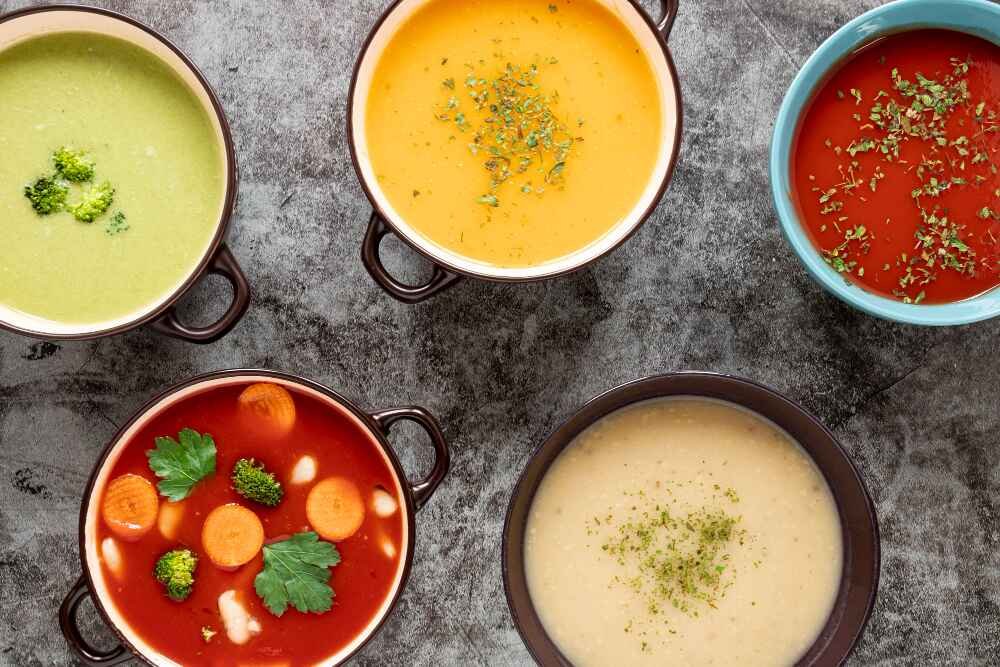
Warming Ayurvedic Winter Soup Recipes to Balance Vata
1. Creamy Pumpkin Soup
Pumpkins are highly nutritious and packed with vitamins and minerals beneficial for the skin and body, as well as rich in antioxidants. It offers several health benefits; despite being rich in carbohydrates and protein, it is low in calories and helps boost immunity.
Here is the recipe for a nourishing, velvety pumpkin soup that caters to your doshas, health, and taste buds, providing warmth and comfort.
Ingredients:
- 2 cups pumpkin puree
- 1 onion, chopped
- 3 cloves garlic, minced 2 cups vegetable broth
- 1 cup coconut milk
- 1-2 tsp finely minced fresh ginger root 1 tsp cinnamon
- Salt and freshly ground black pepper to taste
- 2 tbsp olive oil
How To Prepare
- Add olive oil to a pot and heat it over medium heat. Roast the onion until it turns light brown.
- Then add garlic and ginger, and cook for a short time until you can smell their fragrance.
- Mix Pumpkin puree, vegetable broth (Vegetable soup liquid), and coconut milk.
- For seasoning, add cinnamon, salt, and pepper.
- Let it boil for about 20-25 minutes, as per your preference. Mix it until it becomes smooth.
- Your soup is ready to serve warm. To garnish, sprinkle with cinnamon.
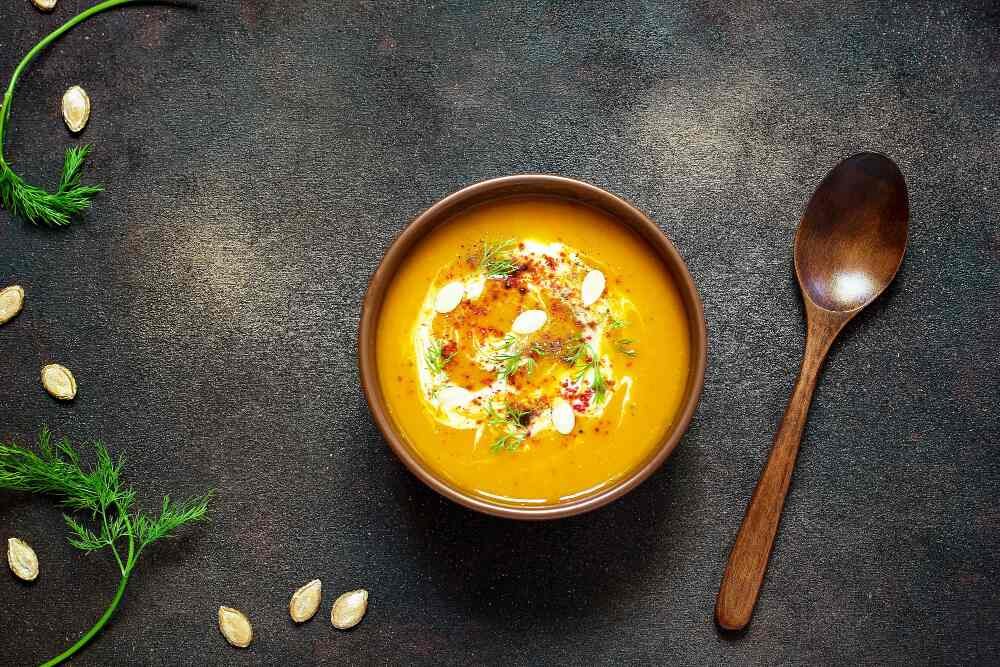
2. Spiced Carrot and Ginger Soup
Beta-carotene in carrots is converted into Vitamin A, and the common root vegetable is a natural source of vitamin C, which supports the immune system, promotes healthy skin, and improves vision. Carrots also aid digestion, promote gut health, support weight management, and help regulate blood sugar levels.
Loaded with a wealth of health benefits, try carrot and ginger soup, which will keep you energised and warm in the chill.
Ingredients:
- Take at least 4 or 5 carrots and an onion along; if preparing for more people, take accordingly. Get all chopped.
- 2 tablespoons of fresh ginger, grated, one tablespoon of cumin, and two tablespoons of olive oil.
- 1 can of coconut milk
- 4 cups vegetable broth
- Salt and pepper
How To Prepare
- Heat olive oil in a large pot over medium heat. Add the onion and fry until soft.
- Consistently mix the carrots and ginger, and cook for an additional 5 minutes, until the carrots are pulpy.
- Then add cumin, vegetable broth, and coconut milk, and leave to boil.
- Let it cook on low heat for 30 minutes, until the carrots are very soft.
- Mix it to the softness and season it with salt and pepper
- Serve with coconut milk for a soothing experience.
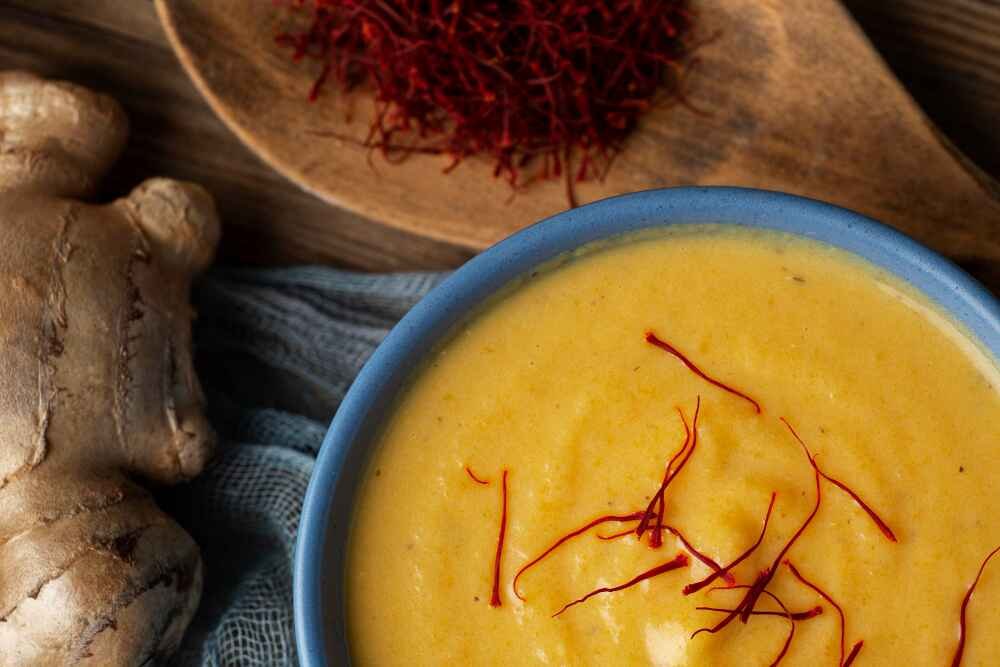
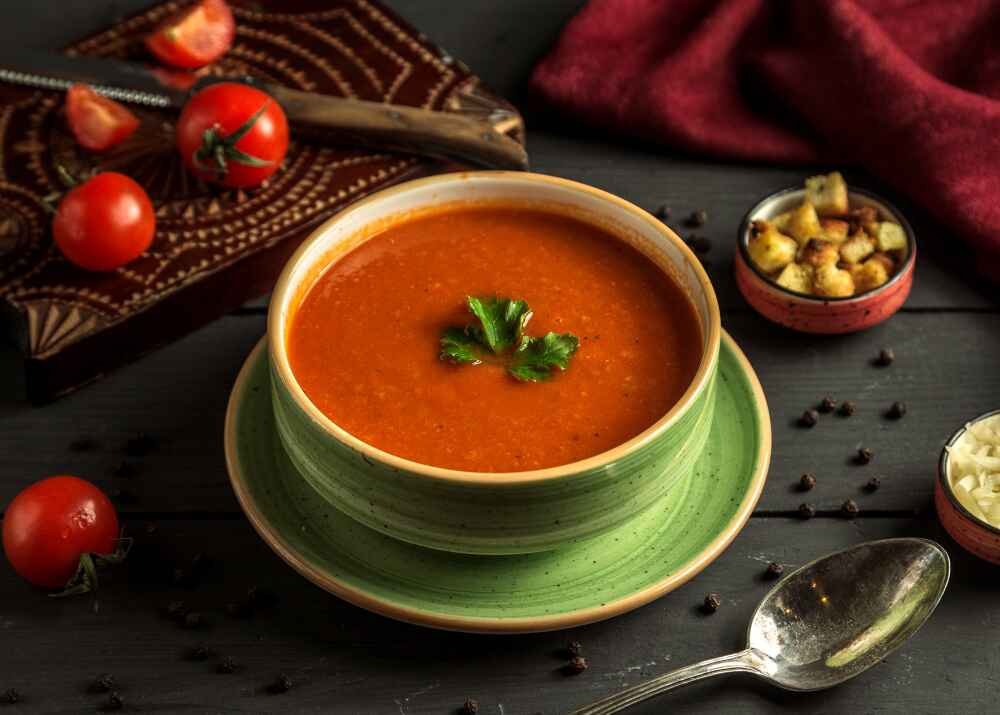
3. Tomato & Basil Soup (Pitta-Friendly)
It is light and soothing and balances Pitta, thereby maintaining a balanced bodily temperature.
Ingredients:
- 5–6 ripe tomatoes, chopped
- 1 onion, chopped
- 2 cloves garlic, minced
- Fresh basil leaves
- 1 tbsp olive oil
- Salt and pepper
Preparation:
- Heat the olive oil, then roast the onion and garlic until they are soft.
- Add tomatoes and boil for 15–20 minutes.
- Mix it with fresh basil and add salt and pepper to taste.
- It is ready to serve warm.
4. Moong Dal Soup
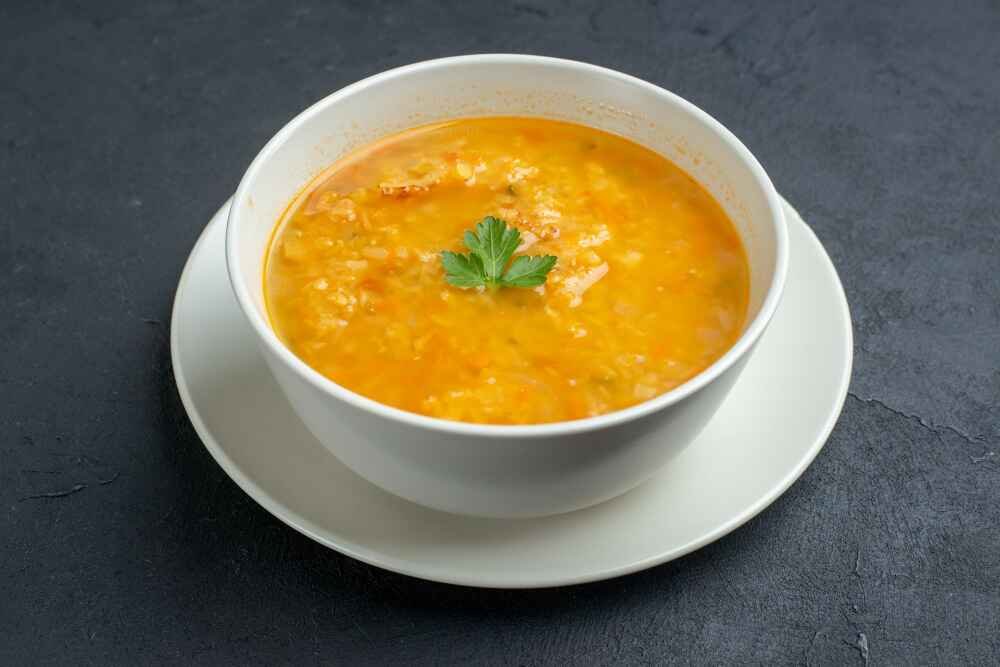
Sweet and cooling soup, ideal for balancing vata and kapha doshas, easy to digest, and promotes strength.
Ingredients
- 1 cup yellow moong dal
- 6 cups water
- 4 Tbs of your preferred cooking oil.
- 1 tsp black mustard seeds
- 1 tsp cumin seeds
- 1 pinch hing (asafetida)
- 2 large cloves of garlic
- Chopped one small handful of coriander leaves.
- chopped five curry leaves, fresh or dried
- 1/2 tsp turmeric, 1 tsp masala powder, and salt accordingly.
Preparation
- Wash the dal twice, place it in a bowl, add 3 cups of water, and bring it to a boil.
- Cook on medium heat for approximately 30 minutes with the lid open; stir occasionally to prevent sticking and check the water level.
- Add three more cups of water and continue cooking for another 20 minutes until the dal is soft.
- Remove the bowl from the heat, mix the dal until smooth, and keep it aside.
- Heat oil in a pan over moderate heat.
- Add cumin seeds, mustard seeds, and hing. Stir it until the seeds start to pop.
- Lower the heat and add garlic, cook until it turns light brown.
- Then, add curry leaves, coriander, turmeric, and masala powder.
- Mix well, then add the mixture to the soup.
- Add salt as desired one final time; then start slowly boiling for a while until everything has mixed together and your soup is ready to serve warm.
Read More: Why Vitamin D Matters for Immunity
Conclusion
Winter is the best time to boost your immune system and build strength. This season is ideal for deep nourishment according to the traditions of Ayurveda. Try these simple ayurvedic soups, which are equally delicious and beneficial and can help you balance your doshas. Apply the principles of ritucharya and add some seasonal fruits or vegetables to your diet. To make your diet rich and warm, you can include savoury spices and enjoy winter to the fullest while staying energetic, warm, and balanced.
If you want to know your dominant dosha and are seeking relief. You can visit the Arogyadham Ayurveda Treatment Centre. Our team works here day and night to address all your queries and deliver concrete solutions rooted in the ancient wisdom of Ayurveda.

Intermittent Fasting Explained: Benefits & Truth
If you have ever tried to get healthy, lose a little bit of weight, or simply feel better in your own body, you already know how...

Amla (Indian Gooseberry): Health Benefits, Uses & Natural Remedies
Amla (Phyllanthus emblica), or the Indian gooseberry, is not just another citrus fruit but a treasure house of natural remedies. Only 100...

Healthy Digestion with Food, Yoga & Lifestyle
A healthy digestive system is the key to good health. It ensures nutrient absorption, drives metabolism, and produces energy. Poor...

5 Ayurvedic Secrets to Beat Work-from-Home Fatigue Naturally
Do you struggle to maintain emotional stability, feel restless, and get unnecessarily or unreasonably anxious sometimes, despite getting...

Panchakarma: The Ultimate Ayurvedic Detox for Body and Mind
In today's fast-paced life, stress and poor dietary habits can quickly lead to physical and mental imbalances. India's ancient science of...