Brain Fog: Causes, Symptoms & Ayurvedic Treatment That Actually Works
- Home
- /
- Skin & Beauty Care
- /
- Brain Fog: Causes, Symptoms...

Brain fog is not a disease. It is a group of symptoms like poor focus, forgetfulness, and feeling mentally slow. Common causes are poor sleep, stress, a poor diet, hormone changes, and health problems like thyroid issues or low B12. Ayurveda treats it by improving digestion, removing toxins (ama), balancing the doshas, and using brain-supporting herbs like Brahmi and Shankhpushpi.
You walk into the kitchen and stand there, unable to remember why you came. Or it’s 3 PM at the office, you’ve just had a big lunch, and the screen in front of you looks like a blur. You read the same email three times, and nothing goes in.
If this sounds familiar, you’re not lazy, and you’re not “getting old.” You may be dealing with brain fog.
The good news is that brain fog usually has a reason behind it, and once you find that reason, it can get better. In this guide, we’ll explain what brain fog really is, why it happens, and how Ayurveda has been helping people get a clear, calm mind for thousands of years.
Key Takeaways
- Brain fog is a set of symptoms, not a disease on its own.
- Poor sleep, stress, weak digestion, and skipped meals are the most common triggers.
- In Ayurveda, brain fog is mostly linked to excess Kapha, ama (toxins), and a weak digestive fire (Agni).
- Herbs like Brahmi, Shankhpushpi and Ashwagandha, along with therapies like Nasya and Shirodhara, can help.
- If brain fog comes with slurred speech, weakness, or sudden confusion, see a doctor right away.
What Is Brain Fog?
Brain fog is a term people use when their mind doesn’t feel sharp. Thinking feels slow, memory slips, and focusing on one thing feels like hard work. It’s like a cloud sitting between you and your thoughts.
Doctors don’t treat brain fog as a separate illness. Instead, they see it as a signal that something in your body or lifestyle is out of balance. That’s why the real fix is finding the cause, not just drinking another cup of coffee.
Brain Fog Meaning in Hindi
In Hindi, people often describe brain fog as “dimag sust lagna,” “dimag mein dhundh,” or “kuch yaad nahi rehta.” All of these point to the same feeling: a tired, heavy, and unclear mind.
Is Brain Fog Serious?
Most of the time, no. Brain fog is common and usually temporary. It doesn’t mean you’re losing your intelligence. But if it lasts for many weeks or keeps getting worse, it’s worth getting checked, because it can sometimes point to a health condition that needs attention.

Common Symptoms of Brain Fog
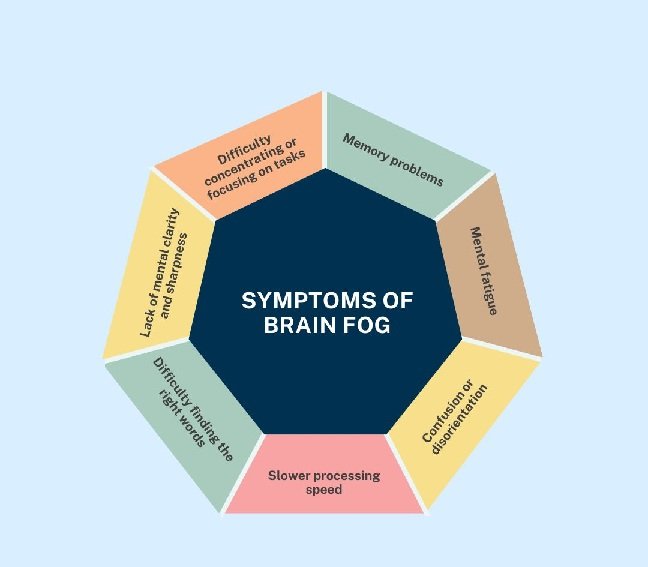
Brain fog feels a little different for everyone. Here are the signs people notice most:
- Trouble focusing or concentrating
- Forgetting small things, like names, keys, or appointments
- Losing your train of thought mid-sentence
- Struggling to find the right word
- Feeling mentally tired even after rest
- Slow thinking and slow reactions
- Feeling confused or “spaced out”
- Low motivation
- Headache or heaviness in the head
Quick self-check: If you notice three or more of these signs on most days for more than two weeks, it’s time to look at the cause instead of ignoring it.
What Causes Brain Fog?
There’s rarely just one cause. Usually, a few small things add up.
1. Lifestyle Causes
- Poor or irregular sleep. Your brain cleans and resets itself during deep sleep. Less sleep means a foggy morning.
- Constant stress. Long-term stress keeps the body in “alert mode,” which tires the mind.
- Too much screen time. Scrolling late at night overloads the brain and disturbs sleep.
- Not drinking enough water. Even mild dehydration can make you feel dull.
- Skipping meals. Running out of the house with just tea means your brain has no fuel until lunch.
- Heavy meals. A big plate of rice, roti, dal, and sabzi followed by sweets can leave you sleepy and blank for hours.
- Too much tea or coffee. It gives a quick boost, then a crash, and it can spoil your sleep.
- Smoking, vaping and alcohol. All of these reduce mental clarity over time.
2. Health Conditions Linked to Brain Fog
- Thyroid problems, especially an underactive thyroid
- Diabetes and blood sugar ups and downs (read our guide on Ayurvedic remedies for diabetes)
- Low iron (anemia), low vitamin B12, or low vitamin D
- Anxiety and depression
- Long COVID or recovery after a viral fever
- Chronic fatigue, fibromyalgia and autoimmune conditions
- Migraine (see our post on Ayurvedic treatment for migraine)
3. Hormonal Changes
Many women notice brain fog during pregnancy, after delivery, with PCOS, and around menopause. Changing hormone levels directly affect memory and focus. Our guide to menopause treatment in Ayurveda covers this in more detail.
4. Medicines
Some medicines, like certain sleeping pills, older allergy tablets, and some mood medicines, can make you feel foggy. Never stop a medicine on your own. Talk to your doctor if you think this might be the cause.

Brain Fog According to Ayurveda
This is where Ayurveda offers something modern medicine often misses. Instead of only looking at the brain, Ayurveda looks at your whole system: your digestion, your doshas, and your daily habits.
The Role of the Three Doshas
Ayurveda says every person is made of three energies, or doshas: Vata, Pitta, and Kapha. When they’re balanced, the mind is clear. When one goes out of balance, the mind suffers.
- Kapha imbalance is the most common cause of brain fog. Kapha is heavy, slow, and cold. Too much of it makes the mind dull, sleepy, and unmotivated, like walking through mud.
- Vata imbalance makes the mind scattered and restless. You may forget things because your thoughts jump around too much.
- Pitta imbalance shows up as burnout. You were pushing hard, and now your mind feels “fried” and irritable.
Ayurveda also talks about tamas, the quality of the mind linked with dullness and inertia. When tamas increases, clarity drops.
Ama and Weak Agni: The Hidden Root
In Ayurveda, Agni is your digestive fire. When Agni is strong, food turns into energy. When it’s weak, food isn’t digested properly and leaves behind a sticky, toxic residue called ama.
According to Ayurveda, ama can block the body’s channels, including the channels of the mind (Manovaha Srotas). This is why you often feel foggy after a heavy, late, or oily meal. Your body is busy dealing with undigested food instead of fueling your brain.

Want to understand this better? Read our post on the power of Agni in Ayurveda.
Which Type of Brain Fog Do You Have?
| Type | How It Feels | What Helps |
|---|---|---|
| Kapha type | Heavy head, sleepy, slow, low motivation, worse in the morning and after meals | Light warm food, exercise, early rising, dry ginger, Nasya |
| Vata type | Scattered thoughts, forgetful, anxious, poor sleep | Regular routine, warm oily food, oil massage, Ashwagandha, Brahmi |
| Pitta type | Burnout, irritability, headaches, overthinking | Cooling foods, rest, Shirodhara, Brahmi, Shankhpushpi |
Many people have a mix of types. An Ayurvedic doctor can check your prakriti (body type) and tell you exactly which imbalance is behind your fog.
Ayurvedic Treatment for Brain Fog
Ayurveda treats brain fog in layers. First, it clears the blockage, then it strengthens the mind.
1. Medhya Rasayana Herbs (Brain Tonics)
Ayurveda has a special group of herbs called Medhya Rasayana, meaning herbs that nourish the mind, memory and intelligence. Classical texts like the Charaka Samhita describe these in detail.
- Brahmi (Bacopa monnieri): The best-known herb for memory and focus. It calms the mind while keeping it alert, which makes it very useful for students and working people. Its effect builds slowly, over several weeks.
- Shankhpushpi: Supports memory and helps calm an anxious, overactive mind. Often given to students before exams.
- Ashwagandha: Helps the body handle stress, improves sleep and fights tiredness, which is very helpful when stress is behind the fog. Read more in our post on the benefits of Ashwagandha.
- Jatamansi: Calming and grounding, useful when brain fog comes with poor sleep or anxiety.
- Guduchi (Giloy): Supports immunity and helps clear toxins, useful for brain fog after a viral illness.
- Yashtimadhu (Mulethi): A classical Medhya herb that nourishes the nervous system.
Important: The right herb and dose depend on your body type, age and health conditions. Herbs can also interact with medicines you already take. Please take them only under the guidance of a qualified Ayurvedic doctor.
2. Nasya Therapy
Ayurveda calls the nose the “doorway to the brain.” In Nasya, medicated oil or herbal drops are put into the nostrils. This helps clear Kapha from the head region and is often used for heaviness, dullness, and poor concentration.
3. Shirodhara
In Shirodhara, a steady stream of warm medicated oil is poured gently over the forehead. It deeply relaxes the nervous system and is very helpful when brain fog comes with stress, anxiety or poor sleep. Most people say they feel lighter and calmer after just one session.
4. Shiro Abhyanga (Head Massage)
A simple oil massage of the head and scalp, using oils like Brahmi oil or warm sesame oil, calms Vata and improves sleep. You can do a basic version at home two or three times a week.
5. Panchakarma for Deep-Rooted Brain Fog
If brain fog has been there for months, Ayurveda may suggest Panchakarma, a complete detox program that removes deep-seated ama and resets your digestion. It’s done under expert supervision and planned around your body type.
Diet for Brain Fog: What to Eat and What to Avoid
Ayurveda believes the mind is made from the food we eat. A few simple diet changes can make a big difference.
| Eat More | Eat Less |
|---|---|
| Warm, freshly cooked meals | Stale, leftover or reheated food |
| A little desi ghee (supports the brain) | Deep-fried and oily snacks |
| Soaked almonds and walnuts | Too much sugar and sweets |
| Seasonal fruits | Maida, white bread and biscuits |
| Moong dal, khichdi and light dals | Very heavy, late-night dinners |
| Thin buttermilk (chaach) with lunch | Too much tea and coffee |
| Spices like ginger, cumin, black pepper and turmeric | Cold drinks and ice-cold water |
A Simple Brain-Friendly Day of Eating
- Early morning: A glass of warm water, then 4–5 soaked almonds
- Breakfast: Vegetable poha, upma or moong dal chilla
- Lunch (main meal): Roti, dal, a seasonal sabzi, salad, and a glass of chaach
- Evening: Herbal tea or a fruit
- Dinner (by 8 PM): Light khichdi or vegetable soup
Tip: Make lunch your biggest meal and dinner your lightest. Ayurveda says digestion is strongest at midday, and a light dinner means better sleep and a clearer morning.
Daily Routine (Dinacharya) to Clear Brain Fog
Small daily habits matter more than any single remedy.
- Wake up early, ideally before sunrise. Sleeping late increases Kapha and heaviness.
- Scrape your tongue to remove the coating of ama that builds up overnight.
- Drink warm water to wake up your digestion.
- Get morning sunlight for 10–15 minutes. It sets your body clock and lifts your mood.
- Move your body for at least 30 minutes, even if it’s just a brisk walk.
- Take short breaks during work. Your brain needs rest every hour or so.
- Switch off screens an hour before bed.
- Sleep by 10:30 PM and try to keep the same time every day.
For more ideas, read our post on 8 Ayurvedic morning rituals to boost your energy.
Yoga and Pranayama for a Sharp Mind
Breathing practices send more oxygen to the brain and calm a busy mind. Try these daily:
- Anulom Vilom (alternate nostril breathing): 5–10 minutes to balance the mind
- Bhramari (humming bee breath): 5–7 rounds to calm stress and anxiety
- Kapalbhati: Helps clear Kapha and heaviness. Avoid it if you’re pregnant, have high blood pressure or heart problems, or have had recent surgery.
- Yoga poses: Sarvangasana (shoulder stand), Balasana (child’s pose), and Shavasana to relax at the end
If you’re new to yoga, learn these from a trained teacher first.
How Long Does Brain Fog Last?
It depends on the cause.
- Poor sleep or stress: Usually gets better within days once you rest and fix your routine.
- After a viral illness or COVID: Can take a few weeks to a few months.
- Hormonal changes or long-term health problems: May last longer and need proper treatment of the root cause.
With the right diet, routine, and Ayurvedic care, most people start noticing a clearer mind within a few weeks.
When to See a Doctor
Brain fog is usually harmless, but get medical help immediately if it comes with any of these:
- Sudden confusion
- Slurred speech or trouble understanding words
- Weakness or numbness on one side of the body
- Sudden vision problems
- A severe or unusual headache
These can be signs of a stroke or another serious problem and need emergency care.
You should also book a check-up if your brain fog lasts more than a few weeks, keeps getting worse, or affects your work, driving or daily life. Simple blood tests for thyroid, sugar, B12, vitamin D, and iron can often find the cause.
Final Thoughts
Brain fog can make you feel like a slower version of yourself, but you don’t have to live with it. In most cases, your body is simply asking for better sleep, lighter food, less stress, and a little care.
Ayurveda doesn’t just cover up the symptoms. It looks for the root cause, whether that’s weak digestion, a dosha imbalance, or built-up toxins, and helps your mind find its natural clarity again.
Struggling with brain fog that won’t go away? Book a consultation with Dr. Rakesh Agarwal at Arogyadham and get a personalized Ayurvedic plan for your body type.
Frequently Asked Questions
Q1. What is the fastest way to clear brain fog?
Ans: Drink a glass of water, step outside for fresh air or sunlight, and take a short walk. These give quick relief. For lasting results, fix your sleep, eat lighter meals, and manage stress.
Q2. Which Ayurvedic herb is best for brain fog?
Ans: Brahmi is the most popular herb for memory and focus. Shankhpushpi and Ashwagandha are also very helpful. The best choice depends on your body type, so consult an Ayurvedic doctor before starting.
Q3. Can brain fog be cured permanently?
Ans: In most cases, yes. When you find and treat the root cause, whether it’s poor sleep, weak digestion, stress or a deficiency, brain fog usually goes away. Healthy daily habits help keep it from coming back.
Q4. Why do I get brain fog after eating?
Ans: Heavy, oily or sugary meals take a lot of energy to digest. Ayurveda explains this as weak Agni creating ama. Eating lighter, warm meals and not overeating can help a lot.
Q5. Can stress and anxiety cause brain fog?
Ans: Yes. Long-term stress tires your mind and disturbs sleep, which leads to poor focus and forgetfulness. Pranayama, Shirodhara and herbs like Ashwagandha can help calm the mind.
Q6. Does vitamin B12 or vitamin D deficiency cause brain fog?
Ans: Yes, low levels of B12, vitamin D and iron are common causes, especially in India. A simple blood test can check this.
Q7. Is brain fog a sign of a serious disease?
Ans: Usually not. But if it comes with slurred speech, weakness, vision changes or a severe headache, see a doctor immediately.
This article is for general information and is not medical advice. If you have a respiratory or heart condition, are pregnant, or are unsure whether these practices suit you, please speak to your doctor before beginning.

क्या आपका दोष असंतुलित है? वात, पित्त और कफ बिगड़ने के 20 संकेत
रिपोर्ट में सब कुछ "नॉर्मल" है, फिर भी दिनभर थकान रहती है। पेट ठीक से साफ़ नहीं होता, नींद अधूरी लगती है, त्वचा बेजान दिखती है, और डॉक्टर...

गर्भधारण क्यों नहीं हो रहा है? महिलाओं और पुरुषों में बांझपन के 15 कारण (और आयुर्वेदिक समाधान)
जब महीने-दर-महीने कोशिश के बाद भी गुड न्यूज़ नहीं आती शादी के बाद हर दंपति के लिए माता-पिता बनने का सपना सबसे खूबसूरत पलों में से एक होता...

What Is Moringa? Benefits, Uses & Side Effects Explained the Ayurvedic Way
Moringa (Moringa oleifera) is a fast-growing, drought-tolerant tree whose leaves, pods, and seeds have been used across India for over...

त्रिफला: आयुर्वेद का सबसे पुराना और भरोसेमंद नुस्खा — जो आज भी उतना ही काम का है
सोचिए — एक चीज़ जो 2,000 साल पहले भी इस्तेमाल होती थी और आज भी हर आयुर्वेदिक दुकान पर मिलती है। न कोई आकर्षक पैकेजिंग, न कोई बड़ा...

Ayurveda For Gut Health: The Ancient Secret To A Happy Digestive System
You finish a meal, and within minutes your stomach blows up like a balloon, or maybe you wake up every morning dreading the...
